 INTERVIEW QUESTIONS
 The Importance of Domain Knowledge in QA: Why Freshers Shouldn't Ignore It

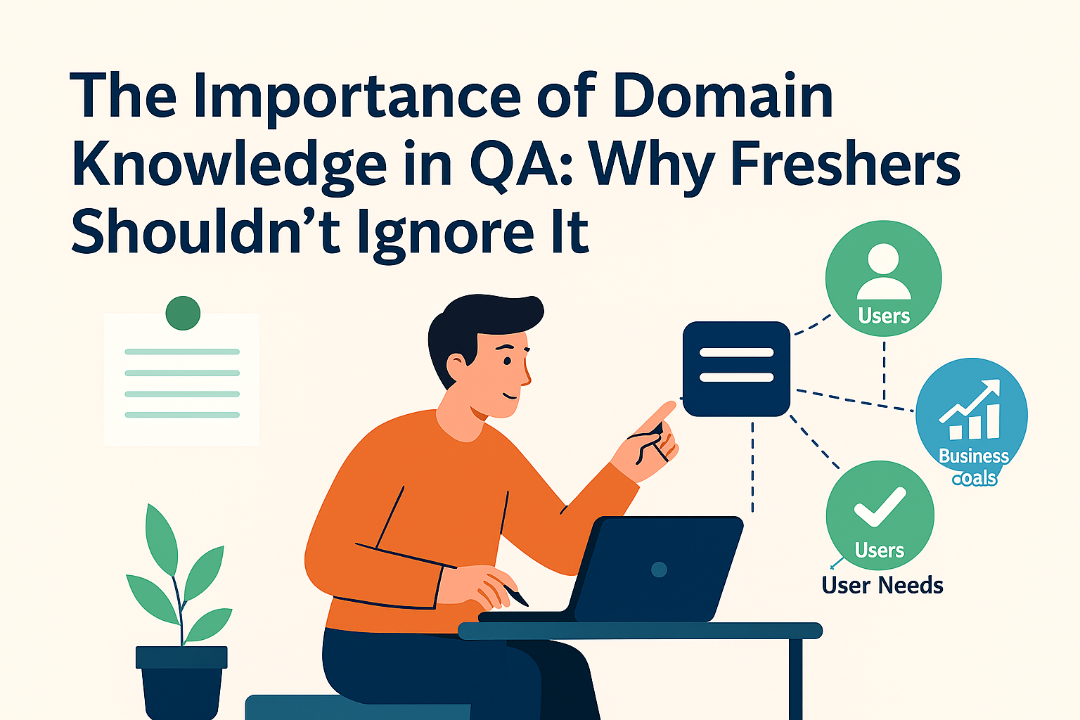
Many QA beginners jump straight into tools, test cases, and automation scripts. While those are important, one factor often overlooked is domain knowledge — understanding the industry or product you’re testing.
Whether it’s banking, healthcare, e-commerce, or fintech, every domain has unique rules and user expectations. As a fresher, learning domain knowledge might feel “extra,” but it can actually make your testing more effective, efficient, and valuable to your team.
What Do We Mean by Domain Knowledge?
Domain knowledge is simply your understanding of the business context behind the product. It’s not just about the code or UI — it’s about:
- How users interact with the product in real life.
- What rules or regulations does the industry follows
- Which scenarios matter most to the business
👉 Example: Testing a banking app isn’t just about checking if the “Transfer” button works. You also need to know about transaction limits, security regulations, and how real customers use the app.
Why Domain Knowledge Matters for QA Beginners
It’s natural to think, “If I know testing tools, why do I need business knowledge?” But domain knowledge isn’t just an extra — it changes how you test, how you report bugs, and how you collaborate with your team. Here’s why it’s especially important for QA freshers:
1. Better Test Coverage
When you understand the product’s real-world usage, you create more meaningful test scenarios. Instead of just checking buttons, you’re validating workflows that customers actually rely on.
2. Improved Bug Reporting
A tester with domain knowledge doesn’t just say “error in transaction flow”. They can report: “Fund transfer fails when the amount exceeds the daily transaction limit on UPI payments.” That level of detail saves developers time and builds credibility for you.
3. Bridging the Gap with Stakeholders
QA often acts as a bridge between users, developers, and business teams. If you speak the “business language” — like compliance in healthcare or cart abandonment in e-commerce — you instantly become a more trusted voice.
4. Career Growth & Specialization
Domain expertise makes you more than a tester. It positions you as someone who understands the product deeply, making you harder to replace and opening doors for roles like QA Analyst, Test Consultant, or even Product Owner.
How Freshers Can Build Domain Knowledge
You don’t need years of experience to start developing domain knowledge. With some curiosity and effort, freshers can build this skill early on. Here are some practical ways:
- Read Industry Basics: Articles, blogs, and documentation about your project’s domain.
- Talk to Business Analysts or Product Managers: Ask them why certain rules exist — it’ll give you context.
- Explore Competitor Products: Seeing how other apps work teaches you industry standards.
- Stay Curious: Whenever you find a requirement, ask, “Why is this needed? How does it help users?”
Conclusion
As a QA fresher, technical skills will get you through the door. But domain knowledge is what makes you stand out. It helps you test smarter, communicate better, and grow faster in your career.
If you’re starting your QA journey today, don’t just learn tools — learn the domain your product lives in. It’s an investment that pays off in every bug you catch and every feature you validate.