 OTHERS
 Data Integrity Life Cycle

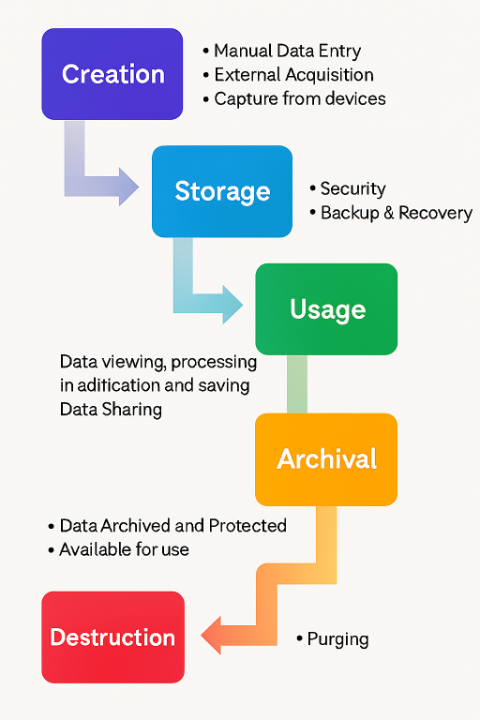
Data Lifecycle Management: Five Essential Phases
Data integrity throughout the complete lifecycle is crucial for organizations, particularly in Life Sciences. Managing data from creation to destruction requires understanding and implementing proper controls at each phase.
The Five Phases of Data Lifecycle Management
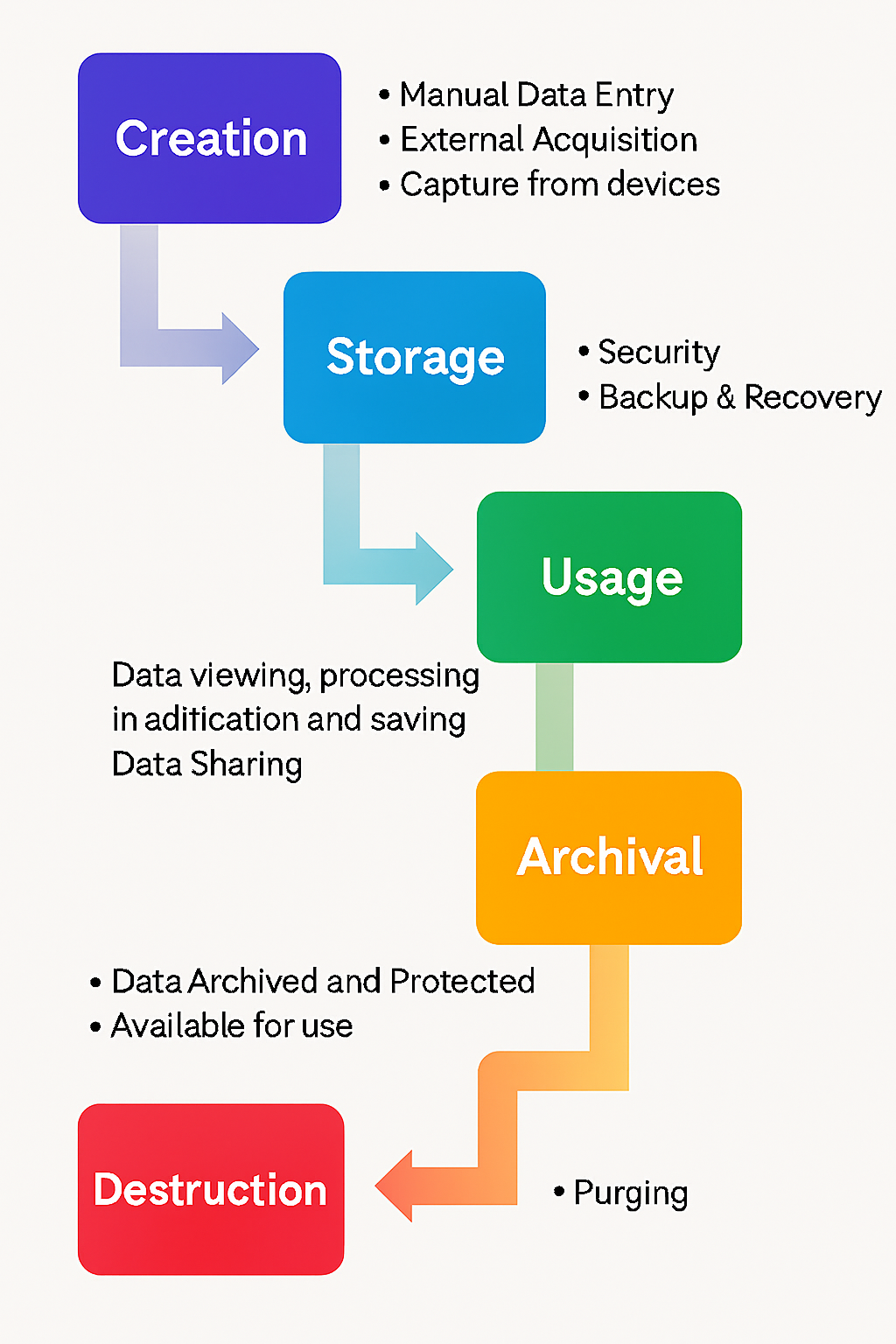
Data Lifecycle Management encompasses the systematic approach to handling data throughout its entire existence within an organization. The process spans from initial generation to final disposal and consists of five key phases:
Phase 1: Data Creation
Data generation occurs through three primary methods:
- Data Acquisition: Obtaining pre-existing external data
- Data Entry: Manual input by organizational personnel
- Data Capture: Automated collection from operational devices and systems
Data emerges in various formats including PDFs, images, Word documents, and database records.
Phase 2: Storage
Following creation, data requires secure storage with appropriate protection measures. Organizations must implement comprehensive backup and recovery procedures to maintain data availability and prevent loss during the lifecycle.
Phase 3: Usage
This operational phase involves active data utilization to support organizational activities. Data undergoes viewing, processing, modification, and preservation. Critical data requires comprehensive audit trails to track all changes and maintain traceability. Organizations may also share data with external parties during this phase.
Phase 4: Archival
Archival involves transferring data to long-term storage environments while removing it from active production systems. Archives serve as inactive repositories where data remains accessible for potential restoration when needed, but receives no regular maintenance or active use.
Phase 5: Destruction
Growing archive volumes create storage costs and compliance challenges, making data destruction necessary. This final phase involves complete removal of data copies from organizational systems, typically from archive locations. Organizations must verify proper destruction methods and confirm data has exceeded required regulatory retention periods before disposal.
Implementation Considerations
Establishing documented data lifecycle management processes enables effective data governance within organizations. Proper lifecycle management ensures regulatory compliance while optimizing storage costs and operational efficiency.